Kimball Bus Matrix
1. What Is the Kimball Bus Matrix
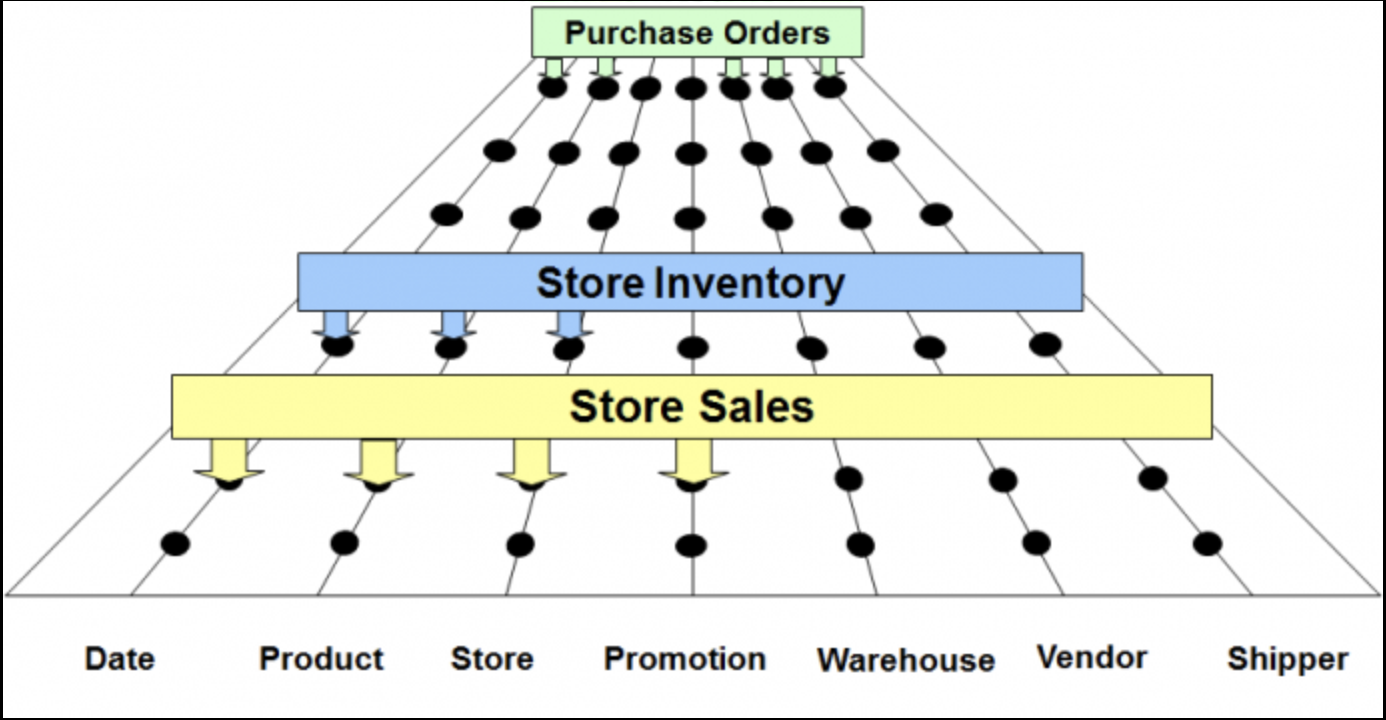
The Kimball Bus Matrix is a planning and governance artifact used in
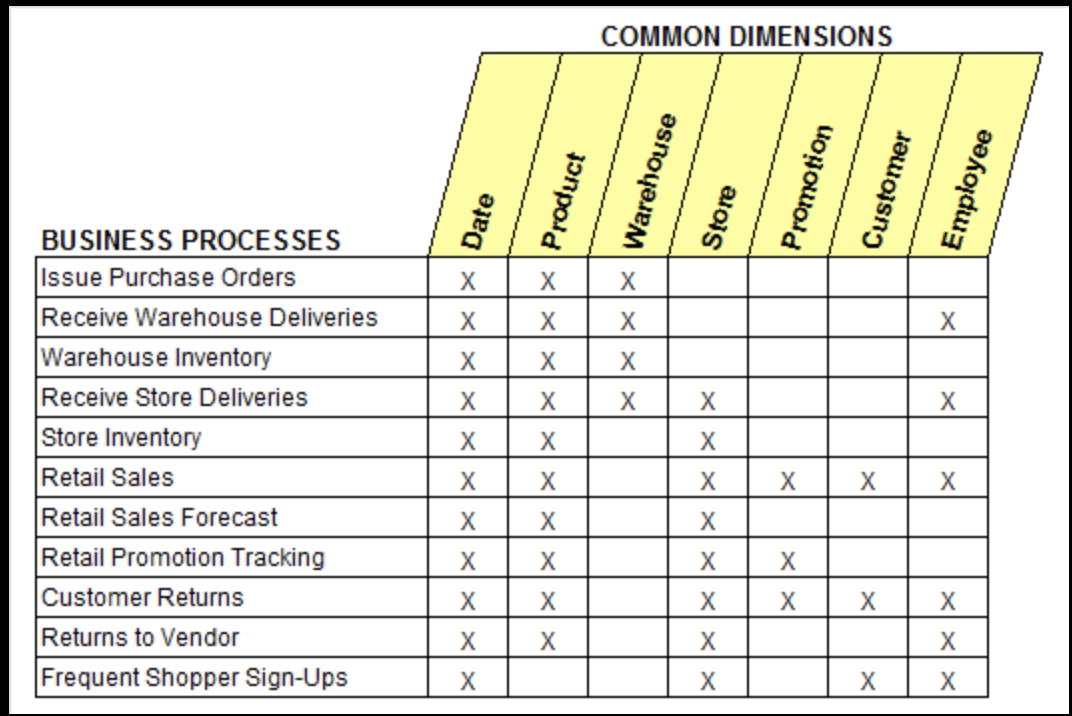
Kimball Dimensional Architecture. It defines how business processes
relate to conformed dimensions across the enterprise.
It serves as the architectural blueprint for building a scalable,
integrated dimensional data warehouse.
2. Visual Example of a Kimball Bus Matrix

3. Structure of the Bus Matrix
3.1 Rows: Business Processes
- Each row represents a business process
- Each process typically maps to one fact table
Examples:
- Sales
- Orders
- Shipments
- Inventory
- Returns
3.2 Columns: Conformed Dimensions
- Each column represents a shared dimension
- Used consistently across multiple fact tables
Examples:
- Date
- Product
- Customer
- Store
- Promotion
3.3 Intersections
- An X indicates the dimension is used by that process
- Defines required dimension keys for each fact table
4. Textual Representation of a Bus Matrix
Business Process | Date | Product | Customer | Store | Promotion
---------------------------------------------------------------
Sales            |  X   |   X     |    X     |   X   |     X
Orders           |  X   |   X     |    X     |   X   |
Shipments        |  X   |   X     |          |   X   |
Inventory        |  X   |   X     |          |   X   |
Returns          |  X   |   X     |    X     |   X   |
5. Why the Bus Matrix Is Critical
- Prevents data mart silos
- Enforces conformed dimensions
- Ensures enterprise-wide consistency
- Supports incremental development
- Acts as a long-term architecture contract
6. How It Drives Dimensional Design
- Select a business process (row)
- Declare the grain of the fact table
- Attach all marked conformed dimensions
- Design the star schema
7. Relationship to Kimball Architecture
- Each row becomes a fact table
- Each column becomes a dimension table
- The full matrix forms the enterprise data warehouse
8. One-Sentence Summary
The Kimball Bus Matrix defines which conformed dimensions apply to each business process,
ensuring scalable, consistent, and integrated dimensional analytics.